Game Companies logo
GameCompanies.com
Powered by GC Insider
IndustriesJobsGames
GC Insider
All gamesuniversesplatformsenginesDevelopmentPublishingGames by year

Something missing or incorrect? Suggest an edit.

GC

  • Industries
  • Jobs
  • Games
  • Map
  • Insider

Info

  • Home
  • Presskit
  • Sitemap

Social

  • Twitter iconTwitter
  • LinkedIn iconLinkedIn
  • Instagram iconInstagram
  • Facebook iconFacebook

Contact

  • GC Advertise
  • Partner with GC
  • Submit your story
  • Suggest an edit
  • E-mail

Policies

  • Terms of service
  • Privacy policy
  • Copyright policy
  • Image policy
  • Cookie policy
Game Companies logo
GameCompanies.com

Powered by GC Insider

© 2025 GameCompanies.com
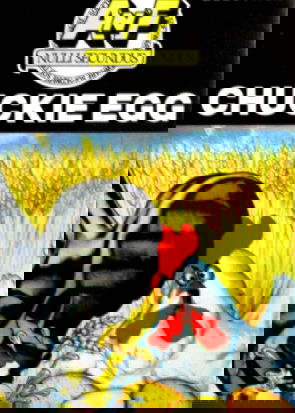
Profile picture of Chuckie Egg


  • Platforms

    Modes

    Player perspectives

    Engines

      View more in GC Insider


    All website links

    All in-game images

    All release dates

    Game videos

    Suggest an edit

    Plus much more
    Makers

    Profile picture of Chuckie Egg

    Chuckie Egg

  • First released on 31 December, 1983 for BBC Microcomputer System, Dragon 32/64, ZX Spectrum
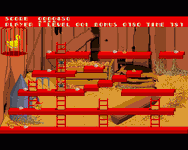
  • As Hen-House Harry, the player must collect the twelve eggs positioned in each level, before a countdown timer reaches zero. In addition there are piles of seed which may be collected to increase points and stop the countdown timer for a while, but will otherwise be eaten by hens that patrol the level, causing them to pause. If the player touches a hen or falls through a gap in the bottom of the level, he loses a life. Each level is made of solid platforms, ladders and occasionally lift platforms that constantly move upwards but upon leaving the top of the screen will reappear at the bottom. Hitting the top of the screen while on one of these lifts, however, will also cause the player to lose a life. Eight levels are defined and are played initially under the watch of a giant caged duck. Upon completion of all eight the levels are played again without hens, but Harry is now pursued by the freed duck who is not affected by the positioning of platforms. A second completion of all eight levels yields a third play through with both hens and the duck. A fourth pass introduces additional hens. Finally, a fifth pass has the duck and additional hens moving at a greater speed. If the player completes all forty levels then they advance to 'level 41' which is in fact exactly the same as level 33. The player starts with five lives, and an extra life is awarded every 10,000 points. The game features a turn-based multiplayer mode.

    Action
    Kids
    Platform
  • First released on 31 December, 1983 for BBC Microcomputer System, Dragon 32/64, ZX Spectrum
  • As Hen-House Harry, the player must collect the twelve eggs positioned in each level, before a countdown timer reaches zero. In addition there are piles of seed which may be collected to increase points and stop the countdown timer for a while, but will otherwise be eaten by hens that patrol the level, causing them to pause. If the player touches a hen or falls through a gap in the bottom of the level, he loses a life. Each level is made of solid platforms, ladders and occasionally lift platforms that constantly move upwards but upon leaving the top of the screen will reappear at the bottom. Hitting the top of the screen while on one of these lifts, however, will also cause the player to lose a life. Eight levels are defined and are played initially under the watch of a giant caged duck. Upon completion of all eight the levels are played again without hens, but Harry is now pursued by the freed duck who is not affected by the positioning of platforms. A second completion of all eight levels yields a third play through with both hens and the duck. A fourth pass introduces additional hens. Finally, a fifth pass has the duck and additional hens moving at a greater speed. If the player completes all forty levels then they advance to 'level 41' which is in fact exactly the same as level 33. The player starts with five lives, and an extra life is awarded every 10,000 points. The game features a turn-based multiplayer mode.


    Game image #1 of Chuckie Egg

    About

    A&F Software's Chuckie Egg is a home computer video game released in 1983, initially for the ZX Spectrum, the BBC Micro and the Dragon. Its subsequent popularity saw it released over the following years on a wide variety of computers, including the Commodore 64, Acorn Electron, MSX, Tatung Einstein, Amstrad CPC and Atari 8-bit family. It was later updated and released for the Commodore Amiga, Atari ST, and IBM PC compatibles.

    The original idea is generally attributed to the then 16 or 17 year old Nigel Alderton. After a month or two of development, Nigel took a pre-release version of his Spectrum code to the two-year-old software company A&F, co-founded by Doug Anderson and Mike Fitzgerald (the "A" and "F", respectively). Doug took on the simultaneous development of the BBC Micro version, whilst Mike Webb, an A&F employee, completed the Dragon port. Chuckie Egg went on to sell over a million copies and remained a steady earner for A&F, who eventually went under in the latter half of the 1980s.

    The versions fall broadly into two groups — those with realistic physics (e.g. the BBC Micro and Amstrad CPC versions) and those without (e.g. the ZX Spectrum version). Although there is a substantial difference in play between the two, levels remain largely the same and all the 8-bit versions have been cited as classics.

    This game is often credited alongside Miner 2049er and Lode Runner with helping develop and popularise the platform game[citation needed], and has gone on to be a cult classic with a number of unofficial retro remakes appearing online.

    Much of the game's cult status was helped by the fact that schools used BBC Micro computers, and many schools had a copy of the game, introducing it to a wide audience of youngsters.

    Platforms

    Dragon 32/64, BBC Microcomputer System, ZX Spectrum, Tatung Einstein, Acorn Electron, MSX, Commodore C64/128, Atari 8-bit, Amstrad CPC, Atari ST/STE, Amiga, PC DOS

    Modes

    Single-player

    , 

    Multi-player

    Player perspectives

    Side view

    Engines

    Not available

      View more in GC Insider


    All website links

    All in-game images

    All release dates

    Game videos

    Suggest an edit

    Plus much more
    Makers

    Image of A&F Software
    A&F Software
    Developer
    Publisher