Game Companies logo
GameCompanies.com
Powered by GC Insider
IndustriesJobsGames
GC Insider
All gamesuniversesplatformsenginesDevelopmentPublishingGames by year

Something missing or incorrect? Suggest an edit.

GC

  • Industries
  • Jobs
  • Games
  • Map
  • Insider

Info

  • Home
  • Presskit
  • Sitemap

Social

  • Twitter iconTwitter
  • LinkedIn iconLinkedIn
  • Instagram iconInstagram
  • Facebook iconFacebook

Contact

  • GC Advertise
  • Partner with GC
  • Submit your story
  • Suggest an edit
  • E-mail

Policies

  • Terms of service
  • Privacy policy
  • Copyright policy
  • Image policy
  • Cookie policy
Game Companies logo
GameCompanies.com

Powered by GC Insider

© 2025 GameCompanies.com
Profile picture of Journey


  • Platforms

    Modes

    Player perspectives

    Engines

      View more in GC Insider


    All website links

    All in-game images

    All release dates

    Game videos

    Suggest an edit

    Plus much more
    Makers

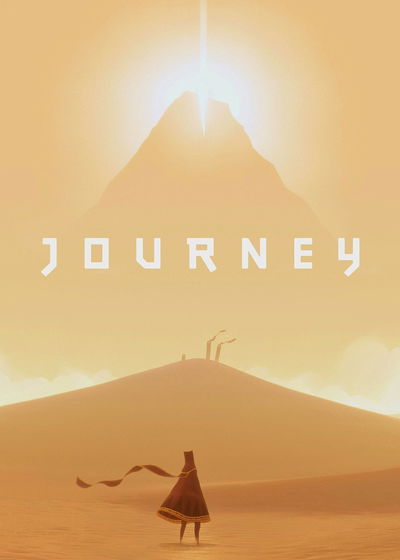
    Profile picture of Journey

    Journey

  • First released on 13 March, 2012 for PlayStation 3
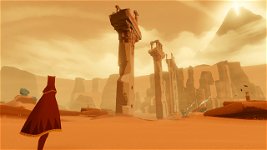
  • Journey‍ '​s story is told wordlessly through in-game and pre-rendered cutscenes. The player's character begins on a sand dune in a seemingly endless desert. In the far distance looms a large, foreboding mountain with a glowing crevice that splits its peak. As the character approaches the mountain, they find remnants of a once-thriving civilization, eroded by sand over time. Scattered throughout the ruins at the end of each area are stones at which the traveler rests; these give the traveler the vision of meeting a larger, white-robed figure in a circular room, with art on the walls describing the rise and fall of the civilization, mirroring the player's journey. The player continues to journey deeper into the remains of a once sprawling city at the base of the mountain. Eventually making it safely to the mountain, the traveler begins to climb it, struggling as they enter the colder climates and encounter deep snow and high winds. With the crevice still a fair distance away, the traveler falls and collapses in the snow. Six of the white-robed figures appear and grant the traveler new energy, allowing the player to reach the summit of the mountain and walk into and through the crevice as the screen fills with white. The player is then shown the game's credits, playing over the ending cinematic. This cinematic shows a shooting star emanating from the crevice and traversing the path the traveler took through the ruins, and shows glimpses of other robed travelers heading towards the mountain. Eventually, the star comes to rest at the sand dune where the game began, and the player is given the option of starting the game again. As the credits end, the player is shown the PlayStation Network IDs of the other travelers who shared part of the trek.

    Action
    Music
    Platform
    Role-playing game
    Adventure
    Indie
  • First released on 13 March, 2012 for PlayStation 3
  • Journey‍ '​s story is told wordlessly through in-game and pre-rendered cutscenes. The player's character begins on a sand dune in a seemingly endless desert. In the far distance looms a large, foreboding mountain with a glowing crevice that splits its peak. As the character approaches the mountain, they find remnants of a once-thriving civilization, eroded by sand over time. Scattered throughout the ruins at the end of each area are stones at which the traveler rests; these give the traveler the vision of meeting a larger, white-robed figure in a circular room, with art on the walls describing the rise and fall of the civilization, mirroring the player's journey. The player continues to journey deeper into the remains of a once sprawling city at the base of the mountain. Eventually making it safely to the mountain, the traveler begins to climb it, struggling as they enter the colder climates and encounter deep snow and high winds. With the crevice still a fair distance away, the traveler falls and collapses in the snow. Six of the white-robed figures appear and grant the traveler new energy, allowing the player to reach the summit of the mountain and walk into and through the crevice as the screen fills with white. The player is then shown the game's credits, playing over the ending cinematic. This cinematic shows a shooting star emanating from the crevice and traversing the path the traveler took through the ruins, and shows glimpses of other robed travelers heading towards the mountain. Eventually, the star comes to rest at the sand dune where the game began, and the player is given the option of starting the game again. As the credits end, the player is shown the PlayStation Network IDs of the other travelers who shared part of the trek.


    Game image #1 of Journey
    Game image #2 of Journey
    Game image #3 of Journey

    About

    In Journey the player controls a robed figure in a vast desert, traveling towards a mountain in the distance. Other players on the same journey can be discovered, and two players can meet and assist each other, but they cannot communicate via speech or text and cannot see each other's names. The only form of communication between the two is a musical chime. This chime also transforms dull, stiff pieces of cloth found throughout the levels into vibrant red, affecting the game world and allowing the player to progress through the levels. The robed figure wears a trailing scarf, which when charged by approaching floating pieces of cloth, briefly allows the player to float through the air.

    The developers sought to evoke in the player a sense of smallness and wonder, and to forge an emotional connection between them and the anonymous players they meet along the way. The music, composed by Austin Wintory, dynamically responds to the player's actions, building a single theme to represent the game's emotional arc throughout the story. Reviewers of the game praised the visual and auditory art as well as the sense of companionship created by playing with a stranger, calling it a moving and emotional experience. Journey won several "game of the year" awards and received several other awards and nominations, including a Best Score Soundtrack for Visual Media nomination for the 2013 Grammy Awards.

    Platforms

    PlayStation 3, PlayStation Network, PlayStation 4, PC

    Modes

    Single-player

    , 

    Co-operative

    Player perspectives

    Third person

    , 

    Side view

    Engines

    PhyreEngine

      View more in GC Insider


    All website links

    All in-game images

    All release dates

    Game videos

    Suggest an edit

    Plus much more

    Makers

    Image of thatgamecompany
    thatgamecompany
    Dedicated to creating timeless interactive entertainment that inspires human connection worldwide.
    Developer
    Image of Sony Interactive Entertainment
    Sony Interactive Entertainment
    Recognized as a global leader in interactive and digital entertainment, Sony Interactive Entertainment (SIE) is responsible for the PlayStation brand and family of products.
    Publisher