Game Companies logo
GameCompanies.com
Powered by GC Insider
IndustriesJobsGames
GC Insider
All gamesuniversesplatformsenginesDevelopmentPublishingGames by year

Something missing or incorrect? Suggest an edit.

GC

  • Industries
  • Jobs
  • Games
  • Map
  • Insider

Info

  • Home
  • Presskit
  • Sitemap

Social

  • Twitter iconTwitter
  • LinkedIn iconLinkedIn
  • Instagram iconInstagram
  • Facebook iconFacebook

Contact

  • GC Advertise
  • Partner with GC
  • Submit your story
  • Suggest an edit
  • E-mail

Policies

  • Terms of service
  • Privacy policy
  • Copyright policy
  • Image policy
  • Cookie policy
Game Companies logo
GameCompanies.com

Powered by GC Insider

© 2025 GameCompanies.com
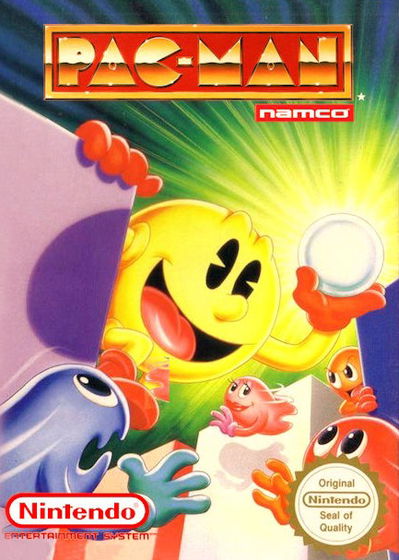
Profile picture of Pac Man


  • Platforms

    Modes

    Player perspectives

    Engines

      View more in GC Insider


    All website links

    All in-game images

    All release dates

    Game videos

    Suggest an edit

    Plus much more
    Makers

    Profile picture of Pac-Man

    Pac-Man

  • First released on 22 May, 1980 for Arcade
  • Action
    Survival
    Puzzle
    Strategy
    Arcade

    Part of the

    PAC-MAN

    game universe.

  • First released on 22 May, 1980 for Arcade

  • Game image #1 of Pac-Man
    Game image #2 of Pac-Man
    Game image #3 of Pac-Man

    About

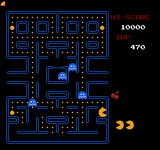
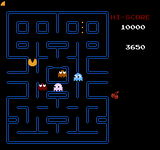
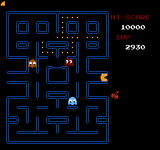
    Pac-Man is an arcade game developed by Namco and first released in Japan on May 22, 1980. it is considered one of the classics of the medium, virtually synonymous with video games, and an icon of 1980s popular culture. The player controls Pac-Man through a maze, eating pac-dots (also called pellets or just dots). When all pac-dots are eaten, Pac-Man is taken to the next stage. Four enemies (Blinky, Pinky, Inky and Clyde) roam the maze, trying to catch Pac-Man. If an enemy touches Pac-Man, a life is lost and the Pac-Man itself withers and dies. When all lives have been lost, the game ends. Near the corners of the maze are four larger, flashing dots known as power pellets that provide Pac-Man with the temporary ability to eat the enemies. The enemies turn deep blue, reverse direction and usually move more slowly. When an enemy is eaten, its eyes remain and return to the center box where it is regenerated in its normal color. Blue enemies flash white to signal that they are about to become dangerous again and the length of time for which the enemies remain vulnerable varies from one stage to the next, generally becoming shorter as the game progresses.

    Platforms

    Arcade, Commodore VIC-20, Atari 8-bit, Atari 5200, Atari 2600, PC-8801, Apple II, ZX Spectrum, Texas Instruments TI-99, Sharp X1, PC DOS, Intellivision, Commodore C64/128, Nintendo Entertainment System, NEC PC-6000 Series, FM-7, MSX, Game Boy, Sega Game Gear, PC-98, Neo Geo Pocket Color, Mobile, PC, Nintendo Wii, Virtual Console, Fairchild Channel F, Windows Phone, Nintendo 3DS, Nintendo Wii U, PlayStation Network, Xbox Live Arcade

    Modes

    Single-player

    Player perspectives

    Side view

    Engines

    Not available

      View more in GC Insider


    All website links

    All in-game images

    All release dates

    Game videos

    Suggest an edit

    Plus much more
    Makers

    Image of Namco
    Namco
    Developer
    Publisher
    Image of Dempa Micomsoft
    Dempa Micomsoft
    Dempa is responsible for a lot of port work that brought arcade hits to various Japanese computers, like the Sharp X68000, X1, and so on.
    Publisher
    Image of SNK Corporation
    SNK Corporation
    The Future Is Now
    Publisher
    Image of Atari, Inc. (original)
    Atari, Inc. (original)
    Publisher