Game Companies logo
GameCompanies.com
Powered by GC Insider
IndustriesJobsGames
GC Insider
All gamesuniversesplatformsenginesDevelopmentPublishingGames by year

Something missing or incorrect? Suggest an edit.

GC

  • Industries
  • Jobs
  • Games
  • Map
  • Insider

Info

  • Home
  • Presskit
  • Sitemap

Social

  • Twitter iconTwitter
  • LinkedIn iconLinkedIn
  • Instagram iconInstagram
  • Facebook iconFacebook

Contact

  • GC Advertise
  • Partner with GC
  • Submit your story
  • Suggest an edit
  • E-mail

Policies

  • Terms of service
  • Privacy policy
  • Copyright policy
  • Image policy
  • Cookie policy
Game Companies logo
GameCompanies.com

Powered by GC Insider

© 2025 GameCompanies.com
Profile picture of Space Travel


  • Platforms

    Modes

    Player perspectives

    Engines

      View more in GC Insider


    All website links

    All in-game images

    All release dates

    Game videos

    Suggest an edit

    Plus much more
    Makers

    Profile picture of Space Travel

    Space Travel

  • First released on 31 December, 1969 for PDP-7
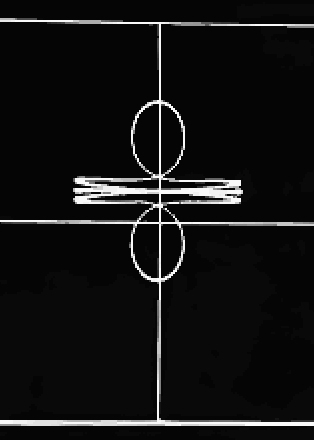
  • Space Travel is a spaceflight simulation video game, presented in a two-dimensional top-down view, with monochrome graphics consisting of white lines on a black background. In it, the player controls a spaceship as it flies through a representation of the solar system. The game has no specific objectives, other than to attempt to land on the various planets and moons of the system. The planets and most of the moons in the solar system are represented to scale both in size and distance from each other, though the orbits are simplified to be circles. To land on a body, the player's ship must cross the line representing the surface while moving at a low enough speed. The player is able to control the ship to go forwards and backwards and turn. The ship moves at a constant level of acceleration relative to the scale of the screen, which the player can control; scaling the screen up high enough allows the player to travel across the solar system in seconds, though they risk overshooting their target and becoming unable to find the solar system again, and scaling down allows the player to be moving slowly enough to land. The ship is always in the center of the screen, facing the top; turning the ship right or left therefore rotates the solar system around the ship instead. Each planet or moon has a mass, and therefore a gravitational pull, though they do not affect one another and only the single strongest pull affects the player's ship. This sometimes results in odd behavior; for example, the gravitational effect of Mars is much stronger than that of its moon Phobos. This means that a player attempting to land on Phobos needs to allow the ship to fall below the moon's surface until it is close enough to Phobos's center that Phobos's pull becomes the dominant force, at which point the ship snaps back to be landed on the surface. The name of the planet or moon with the current strongest pull is displayed on the screen. Players are able to edit the program to change the conditions; popular variations by the original players were increasing the gravity level and thus the difficulty, or an adjustment to the coordinate display system so that, rather than the ship staying in the center of the screen and the planets moving relative to it, the current dominant planet would always be at the bottom of the screen, with the ship moving relative to it.

    Science fiction
    Simulator
  • First released on 31 December, 1969 for PDP-7
  • Space Travel is a spaceflight simulation video game, presented in a two-dimensional top-down view, with monochrome graphics consisting of white lines on a black background. In it, the player controls a spaceship as it flies through a representation of the solar system. The game has no specific objectives, other than to attempt to land on the various planets and moons of the system. The planets and most of the moons in the solar system are represented to scale both in size and distance from each other, though the orbits are simplified to be circles. To land on a body, the player's ship must cross the line representing the surface while moving at a low enough speed. The player is able to control the ship to go forwards and backwards and turn. The ship moves at a constant level of acceleration relative to the scale of the screen, which the player can control; scaling the screen up high enough allows the player to travel across the solar system in seconds, though they risk overshooting their target and becoming unable to find the solar system again, and scaling down allows the player to be moving slowly enough to land. The ship is always in the center of the screen, facing the top; turning the ship right or left therefore rotates the solar system around the ship instead. Each planet or moon has a mass, and therefore a gravitational pull, though they do not affect one another and only the single strongest pull affects the player's ship. This sometimes results in odd behavior; for example, the gravitational effect of Mars is much stronger than that of its moon Phobos. This means that a player attempting to land on Phobos needs to allow the ship to fall below the moon's surface until it is close enough to Phobos's center that Phobos's pull becomes the dominant force, at which point the ship snaps back to be landed on the surface. The name of the planet or moon with the current strongest pull is displayed on the screen. Players are able to edit the program to change the conditions; popular variations by the original players were increasing the gravity level and thus the difficulty, or an adjustment to the coordinate display system so that, rather than the ship staying in the center of the screen and the planets moving relative to it, the current dominant planet would always be at the bottom of the screen, with the ship moving relative to it.


    About

    Space Travel was an early computer game that simulated travel in the solar system.

    Platforms

    PDP-7

    Modes

    Not available

    Player perspectives

    Not available

    Engines

    Not available

      View more in GC Insider


    All website links

    All in-game images

    All release dates

    Game videos

    Suggest an edit

    Plus much more

    Makers

    No makers for this title yet